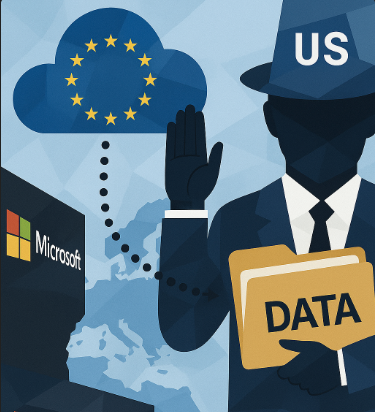
The Wennink Report:
A Blueprint for European Digital Sovereignty and FOSS H's Strategic Opportunity
18 december 2025
How the Dutch Economic Strategy Creates a €126 Billion Market for Open Source Transformation
In September 2025, former ASML CEO Peter Wennink delivered what many are calling Europe's most ambitious economic transformation strategy since the post-war reconstruction period. The Rapport Wennink ("The Route to Future Prosperity") presents a stark diagnosis: Europe is losing its technological sovereignty to the US and China at an alarming rate, and without immediate, decisive action, European prosperity ... and with it, democratic resilience ... faces an existential threat.
For organizations like FOSS H, this report isn't just policy analysis ... it's a market validation of everything we've been advocating for years.
The Sovereignty Crisis: Why Europe Must Act Now
The numbers are sobering. According to the report, the investment gap between European and American companies has widened from 36% to 76% in just seven years, reaching €700 billion annually. In critical technologies ... artificial intelligence, semiconductors, quantum computing, biotechnology ... Europe has shifted from leader to follower, becoming increasingly dependent on decisions made in Silicon Valley and Beijing.
"Nederland kan niet afhankelijk blijven van anderen voor technologie waar onze toekomst van afhangt," warned Wennink in his foreword. "We must choose to be co-shapers of the future, not mere observers of change."
This dependency isn't just an economic issue ... it's a strategic vulnerability that threatens European autonomy in an increasingly polarized world.
The Four Pillars of Strategic Relevance
The report identifies four strategic domains where Europe must maintain or regain technological leadership:
Digitalization & AI - The foundation of all modern innovation
Security & Resilience - Protecting European values and infrastructure
Energy & Climate Technology - Leading the green transition
Life Sciences & Biotechnology - Health security and medical advancement
Each domain requires massive investment ... €151-187 billion over the next decade ... but more importantly, each demands a fundamental shift in how we approach technology adoption.
Why Open Source is the Answer
Here's where FOSS H's mission becomes not just relevant, but essential. The Wennink Report's prescription for technological sovereignty aligns perfectly with the open source philosophy:
Breaking Vendor Lock-in
The report identifies vendor lock-in as a critical barrier to innovation and strategic flexibility. Organizations trapped in proprietary ecosystems cannot adapt quickly to changing strategic needs, making them vulnerable to geopolitical pressure and commercial exploitation.
Reducing Strategic Dependencies
Open source solutions eliminate single points of failure. When critical infrastructure depends on proprietary technology controlled by foreign entities, European organizations face unacceptable risks. Open source provides the transparency and control necessary for true digital sovereignty.
Accelerating Innovation
The report emphasizes the need for rapid innovation cycles. Open source development models, with their distributed collaboration and rapid iteration, provide exactly the speed and agility that traditional proprietary development cannot match.
Talent Development
Perhaps most crucially, the report identifies talent as the binding constraint. European organizations need workforce skills that transcend vendor-specific training and provide deep, transferable expertise. Open source education develops precisely these capabilities.
The Business Case: €126 Billion in Opportunity
The Wennink Report isn't just policy ... it's backed by concrete investment commitments. Through extensive public-private consultation, 51 concrete investment propositions worth €126 billion were identified, with the majority to be privately financed.
This creates immediate opportunities for FOSS H clients to:
Access New Funding Streams - Many of the identified investments prioritize digital sovereignty and strategic relevance
Reduce Total Cost of Ownership - Open source solutions eliminate recurring license fees and vendor lock-in penalties
Future-proof Technology Stacks - Open source provides the flexibility needed for rapid strategic pivots
Develop Competitive Advantages - Strategic independence enables unique market positioning
Strategic Domains in Action
Let's examine how FOSS H can support European organizations in each of the four strategic domains:
Digitalization & AI
The report calls for Europe to achieve "strategic relevance" in AI development. FOSS H's expertise in open source AI adoption directly supports this goal by enabling organizations to:
Build AI capabilities without depending on proprietary platforms
Ensure GDPR compliance and data sovereignty
Develop AI solutions tailored to European values and regulations
Security & Resilience
Critical infrastructure must be both secure and sovereign. Open source implementations provide:
Complete transparency of security implementations
Ability to audit and modify code for specific security requirements
Independence from foreign technology dependencies
Energy & Climate Technology
The green transition requires unprecedented innovation. Open source approaches enable:
Rapid iteration of clean technology solutions
Collaborative development of climate technologies
Reduced costs through elimination of proprietary software licensing
Life Sciences & Biotechnology
Healthcare and biotechnology demand both innovation and security. Open source platforms provide:
Transparent algorithms for medical decision-making
Secure, sovereign health data management
Collaborative research acceleration
The Talent Transformation Imperative
The report's most urgent concern is talent.
"We have a structured gap in re-skilling opportunities that better align our workforce skills with changing demands,"
... it states, noting that education quality has declined year over year while technical talent becomes increasingly scarce.
This creates a perfect opportunity for FOSS H's "future-proof your workforce" approach:
Immediate Up-skilling Programs
Open source skills are immediately applicable across all four strategic domains. FOSS H can provide:
Accelerated training programs for existing technical staff
Management education on open source strategic benefits
Certification programs aligned with Dutch and European strategic priorities
Long-term Capability Building
Beyond immediate needs, FOSS H can help organizations build sustainable open source competencies that will be essential for the next decade of technological development.
Regulatory Alignment: Enabling Innovation
The Wennink Report calls for "faster permitting and simplified rules" to enable strategic investments. Open source approaches naturally align with this need by:
Reducing complexity through standardization
Eliminating proprietary vendor dependencies
Enabling rapid prototyping and iteration
Supporting the report's proposed "regulatory sandboxes" for strategic innovations
The Dutch Leadership Opportunity
The report positions the Netherlands as a potential European leader in this transformation, with its strong knowledge base, innovative companies, and tradition of public-private collaboration. FOSS H is uniquely positioned to support Dutch organizations in this leadership role.
The Netherlands' strategic advantages ... excellent universities, strong industrial base, and favorable business environment ... make it the ideal testbed for the open source digital sovereignty strategies that Europe needs.
Global Implications: A Model for Europe
The Wennink Report's vision extends beyond national boundaries:
"A strong Netherlands in a relevant Europe."
Success in the Netherlands can serve as a model for other European nations facing similar challenges.
FOSS H's European focus positions the organization to scale successful Dutch approaches across the continent, creating a network of digitally sovereign, strategically relevant organizations.
Implementation Roadmap
The report provides a detailed implementation timeline that FOSS H can leverage:
First 100 Days
Engage with Dutch government strategy and public-private partnerships;
Position open source as enabling faster innovation and reduced regulatory complexity;
Develop pilot programs with strategic organizations
First Year
Launch comprehensive talent development programs;
Establish partnerships with Dutch innovation ecosystems;
Create regulatory sandbox proposals for open source digital sovereignty.
Five-Year Horizon
Scale successful approaches across European markets;
Develop strategic partnerships with European innovation agencies;
Position as the go-to partner for digital sovereignty implementation.
Ten-Year Vision
Establish FOSS H as the European leader in open source digital transformation;
Support European strategic autonomy across all four domains;
Create a self-reinforcing ecosystem of digitally sovereign organizations.
Conclusion: Seizing the Sovereignty Moment
The Wennink Report represents more than policy ... it's a fundamental recognition that European prosperity and democratic resilience depend on technological sovereignty. The report's urgency, scale, and strategic clarity create an unprecedented opportunity for organizations committed to open source solutions.
For FOSS H, this isn't just business ... it's a chance to be part of history. As Europe awakens to the necessity of digital sovereignty, we have the expertise, approach, and vision to help organizations navigate this transformation successfully.
The report's closing challenge is clear:
"Laten we beginnen"—let's begin.
For FOSS H, the time to act is now.
FOSS H helps European organizations migrate from Big Tech solutions to Free and Open Source Software and open-source AI, enabling digital sovereignty, cost savings, and GDPR compliance. Learn how we can future-proof your workforce and strategic independence at fossh-talent-transformation.eu.
Contact: mjgFOSSH@proton.me
This analysis is based on the official "Rapport Wennink: De Route naar Toekomstige Welvaart" published in December 2025.
Goodbye, Microsoft: Schleswig-Holstein relies on Open Source and saves millions
Schleswig-Holstein saves 15 million euros in license costs by migrating from Microsoft to free software. The conversion is significantly cheaper.
Dec 7, 2025 at 2:04 pm CET
4 min. read
The state administration of Schleswig-Holstein is making a remarkable U-turn in its IT strategy and consistently relying on open source. After the migration from proprietary Microsoft software to free solutions was initially accompanied by problems and criticism, Digitalization Minister Dirk Schrödter (CDU) can now report a significant success: According to his ministry, the state will save over 15 million euros in license costs for Windows, Microsoft Office & Co. next year alone. It is expected to be similar in the following years.
In contrast, there would be one-time investments of nine million euros in 2026, explained the Ministry of Digitalization in a statement. These would have to be made for the conversion of workplaces and the further development of solutions with free software in the next 12 months. Given the annual savings, this sum will pay for itself in less than a year. In the past, the state transferred millions to the US company Microsoft, primarily for the use of office software and other programs.
The department sees the departure from this "vendor lock-in" – the dependence on a single large provider – as a clear signal for greater independence and sustainable digitalization. The financial incentive now underscores that digital sovereignty can be not only a political buzzword but also an economic gain.
Almost 80 percent of licenses canceled
The numbers speak for themselves: outside the tax administration, almost 80 percent of workplaces in the state administration have already been switched to the open-source office software LibreOffice. Schrödter thus confirms a course that reduces technical and economic dependence on individual manufacturers. The consequence of the conversion was already evident recently, as Schrödter emphasized in an interview with c't. Regarding the status of Microsoft license cancellations, he said: "We are at almost 80, without the tax administration." For tax matters, the state finance ministers have "given themselves a clear timetable for the switch." Recently, the Christian Democrat also emphasized, according to the Südtiroler Wirtschaftszeitung, that the state has entered a marathon, not just a sprint.
The remaining 20 percent of workplaces are currently still dependent on Microsoft programs such as Word or Excel, as there is a technical dependency on these programs in certain specialized applications. According to Schrödter, however, the successive conversion of these remaining computers is the stated goal.
Opposition sees challenges
Despite the savings and the almost completed migration in large parts of the administration, the opposition continues to criticize the quality of the conversion. SPD state parliament member Kianusch Stender pointed out to the Kieler Nachrichten: "It may be that on paper 80 percent of workplaces have been converted. But far fewer than 80 percent of employees can now work with them properly." Errors in the migration are "still present." The initial difficulties in introducing the open-source programs have apparently led to ongoing frustration among some employees in certain areas.
The Green state parliament member Jan Kürschner also admitted in an interview with heise online that such a comprehensive conversion would not go without friction. But he emphasized the long-term nature of the project and the necessity of fundamentally rethinking administrative processes: "With the change, there is an opportunity to truly rethink the administration and free ourselves from old burdens. That is the great added value." If only a one-to-one conversion is made, it might certainly "stumble at one point or another." But those who truly optimize administrative processes will likely find in the end: "Open source is the better way."
The challenge now is to resolve the initial migration problems and acceptance difficulties and to further develop the open-source solutions so that they fully meet the requirements of a modern state administration. The savings achieved give Schleswig-Holstein more financial leeway for this.
European governments opt for open source alternatives to Big Tech encrypted communications
European governments are rolling out decentralised secure messaging and collaboration services as they seek to reduce their reliance on Big Tech companies
Published: 31 Oct 2025 18:00
European governments are increasingly turning towards open standards alternatives to end-to-end encrypted messaging and collaboration services dominated by WhatsApp and Microsoft Teams.
An open network messaging architecture, known as Matrix, is attracting interest from European governments that are seeking “sovereign” alternatives to encrypted collaboration and messaging tools supplied by US Big Tech companies.
Matrix aims to create an open standard for messaging, that would allow people to communicate irrespective of which messaging service they use, in much the same way that people can send emails to anyone irrespective of which email provider they use.
The German armed forces and the French government each have hundreds of thousands of government employees using messaging technology based on Matrix.
Swiss Post has used the technology to build an encrypted messaging service for postal users, and other projects are underway in Sweden, the European Commission and the Netherlands.
Matthew Hodgson co-founded Matrix as a not-for-profit open source project to develop technical standards for secure decentralised messaging, video and voice services in 2014.
When he is not working for Matrix, Hodgson is the CEO of Element, which provides encrypted communications services based on the Matrix protocol, to France, Nato and other government organisations.
Risk of US sanctions
He says European governments have shown increasing interest in using open source IT as a way of reducing their dependence on US Big Tech suppliers and creating their own sovereign alternatives in the wake of increasing geopolitical uncertainty.
The decision by the US to impose sanctions on the International Criminal Court (ICC) in the Hague in February 2025, showed that sovereign states can no longer assume that cloud-based IT services supplied by Microsoft and other Big Tech companies are immune from world politics.
The sanctions impacted US suppliers that provide the court with “financial, material, or technological support,” prompting the ICC - which is heavily reliant on Microsoft - to seek to negotiate new IT contracts with other non-US suppliers.
“We have seen first-hand that US Big Tech companies are not reliable partners and out of common sense, for your country to be operationally dependent on another country is a crazy risk,” said Hodgson.
The “Signalgate” scandal was also a “huge wake-up call”. In April, it emerged that US national security advisor Mike Waltz inadvertently added a journalist to a classified group discussion on a Signal-based messaging service.
The incident led to renewed concerns about the proliferation of shadow communications technology among governments.
Encryption double-think
However, the same European governments that are advocating developing sovereign encrypted messaging services are also resisting the spread of end-to-end encryption.
This is happening through mechanisms like Chat Control, a European proposal to require technology companies to scan messages for illegal content before being encrypted, which has the unintended consequence of undermining the security of communications.
“There are obviously different factions and governments pushing in different directions,” said Hodgson. “I think Chat Control comes from a curious combination of ignorance and political gamesmanship, trying to score points.”
“My hope is that we will end up in a big, global peer-to-peer network without servers that cannot be compromised, undermined, surveilled or otherwise disrupted”
Matthew Hodgson, Element
In the UK, the Home Office has required Apple to give law enforcement and the intelligence services the capability to access the encrypted data that UK citizens have backed-up on Apple’s iCloud service.
Hodgson says that if the Home Office issues a similar order against Element, it would have no choice but to withdraw its services from the UK, or from Europe, if Chat Control was ever introduced.
The result would not be the disappearance of encrypted messaging apps, says Hodgson, but more likely a proliferation of home-grown encryption apps as people seek ways to maintain their privacy.
Look back to the crypto wars of the 1990s, when the US government sought to control and limit the spread of encryption technology - those efforts were thwarted by Phil Zimmerman who developed PGP encryption software.
Although it was technically illegal to distribute PGP, “mysteriously,” said Hodgson, “everyone was using it”.
“Even if Element was unable to publish apps in the app stores of European countries because of Chat Control, I strongly suspect that many other people will go and publish their own apps and make them available somehow,” he added.
No single point of attack
One of Matrix’s advantages as a communications standard is that it is decentralised. That means there is no single point of attack that would allow hackers to gain access to the whole network.
Hodgson contrasts that with Signal, an encrypted messaging service widely used by journalists and human rights campaigners, which presents a bigger target for hackers.
“Signal has very good encryption, and we use their encryption so we owe a lot to them,” he said. “On the flip side, if you are a motivated bad actor, with Signal there is only one app and one instance that you have to compromise.”
Another advantage of Matrix is that is interoperable, which means that one messaging platform built on Matrix, should have the capability to communicate with another.
With Nato deploying Matrix-based communications, for example, it would make sense for Nato forces to use encrypted Matrix-based messengers to communicate with each other.
France and Germany are understood to be in discussions about enabling messaging between the two countries.
Matrix 'at least as good' as WhatsApp
Apps built on Matrix have been less slick and less easy to set up than alternatives such as Signal and WhatsApp but that is beginning to change. Hodgson says there are a bunch of “really mature glossy apps” that are at least as good.
It’s taken longer to get there because taking a decentralised approach is always more difficult than a centralised approach – at least 10 times harder, he says.
Read more about encrypted messaging
Inspired by the EU: Sweden eyes open standard for encrypted chat services - What if your messaging and collaboration app could talk to all the others? Swedish government agencies are investigating the possibility.
EU Chat Control plans pose ‘existential catastrophic risk’ to encryption, says Signal - As EU member states prepare to vote on plans to mandate tech companies to introduce technology to scan messages before they are encrypted, Signal warns that Chat Control will create new security risks.
Rethinking secure comms: Are encrypted platforms still enough? - A leak of information on American military operations caused a major political incident in March 2025. The Security Think Tank considers what CISOs can learn from this potentially fatal error.
Funding has also been an issue, as some governments deploying Matrix’s open networking protocol as part of critical national infrastructure have not opted to support Matrix financially.
Hodgson had assumed that as more governments and corporations started using Matrix there would be more money available for development.
Instead the funding often went to systems integrators hired by governments to deploy Matrix, rather than into Matrix itself.
Change of tack on fundraising
Element largely funded the development of Matrix up until 2023, but was forced to “aggressively change tack,” when the funds to support the protocol’s development failed to materialise.
Today Matrix relies on funding from a membership programme and is also looking at applying for grants while it grows its membership base.
“We are getting there now and I am hoping that in the next few months we will be out of the other side of that and really be able to start accelerating development again,” he said.
Hodgson’s philosophy is that features developed to empower users of Matrix should be made available free of charge, but features that empower enterprises should be paid for.
Paid services include antivirus, information classification labels, and measures to prevent the wrong people being accidently included into chats.
People can sign up for Matrix without setting up their own server, but deploying Matrix could become even simpler in the future. The Dutch government has agreed to fund the development of a peer-to-peer version of Matrix, that obviates the need for a server altogether.
In the meantime, work is underway with technology partners to deal with spam messages, AI slop and botnet produced propaganda, that have all grown as Matrix deployments have expanded.
“My hope is that we will end up in a big, global peer-to-peer network without servers that cannot be compromised, undermined, surveilled or otherwise disrupted,” said Hodgson.
How European governments are using Matrix
Tchap - Secure messaging and collaboration tool used in French public sector, with over 300,000 users.
BwMessenger - Messaging app used by the German armed forces (Bundeswehr), which has gathered over 100,000 active users since its launch in 2020.
TI-Messenger - Messaging app introduced for the German healthcare system, available to all citizens with public health insurance.
ePost - Multi-function app introduced by Swiss Post to allow citizens to communicate with banks, insurance companies, hospitals and clubs. Allows users to pay bills and store and access documents.
European Commission - The European Commission is developing a secure Matrix-based platform to allow European bodies and instutions to exchange secure communications.
Nato - Nato is running an experimental project, NICE2, aimed at finding an alternative to consumer apps, such as Signal, WhatsApp and Telegram, for the defence sector.
Digital Sovereignty Isn’t Just Talk Anymore: Why European Governments Are Breaking Up With Microsoft
Published On: November 5, 2025
Key Takeaways:
Massive European Microsoft Exodus: Denmark, Germany, France, Italy, and Austria migrate 800,000+ government workstations from Windows and Office to open-source alternatives like LibreOffice and Linux, driven by digital sovereignty concerns and vendor lock-in
U.S. Cloud Act and Data Sovereignty Risks: Microsoft confirmed under oath that European data stored in EU datacenters remains vulnerable to U.S. government access requests, prompting governments to reclaim control over critical digital infrastructure
Tens of Millions in Cost Savings: Schleswig-Holstein saves tens of millions on Linux migration, France’s Toulouse documents €1.8M savings over three years, Italy’s Defense Ministry projects €29M savings, with SaaS price increases averaging 73% across vendors in 2023
EU Regulatory Pressure on Microsoft: European Commission antitrust investigations, UK Competition and Markets Authority probes, and Interoperable Europe Act now require public sector to consider open-source alternatives first, challenging Microsoft’s 80% market dominance
Vendor Lock-In Breaking Point: Microsoft’s 15% price increases, forced Windows 10 upgrade cycles, and anti-competitive Azure licensing terms push governments and enterprises to overcome switching costs and embrace LibreOffice, Linux, and open-source productivity tools
The headlines keep coming. Denmark ditches Windows and Office. Germany’s Schleswig-Holstein eliminates Microsoft from 30,000 government computers. France moves 500,000 workstations to LibreOffice. Italy’s military transitions 150,000 PCs to open source. Austria completes a four-year migration away from Microsoft Office across its entire armed forces.
This isn’t lip service. This is a movement.
Across Europe, governments are making a calculated exit from Microsoft’s ecosystem, and they’re doing it for reasons that go far beyond budget spreadsheets and software preferences. They’re reclaiming control over their digital infrastructure, refusing to accept vendor lock-in as an inevitability, and pushing back against relentless price increases that have become the new normal in enterprise software.
The Sovereignty Imperative
Digital sovereignty has evolved from a buzzword into a strategic priority. At its core, it means something straightforward: the ability of a state to independently manage its digital assets, infrastructure, and data without undue reliance on foreign entities or commercial suppliers.
Denmark’s Digitalization Minister Caroline Stage put it bluntly: “We must never make ourselves so dependent on so few that we can no longer act freely. Too much public digital infrastructure is currently tied up with very few foreign suppliers. This makes us vulnerable.”
She’s not exaggerating. When Microsoft temporarily restricted email access for the International Criminal Court’s Chief Prosecutor, reportedly following U.S. sanctions, it sent a clear message: relying on American tech giants means your critical systems can be shut down by decisions made in Washington, not in your own capital.
The U.S. Cloud Act compounds these concerns. This legislation requires American companies to comply with U.S. government data requests, even when that data is stored on servers in Europe. Microsoft’s own lawyer confirmed this under oath in the French Senate in June 2025, admitting he cannot guarantee that French data stored in European Microsoft datacenters is safe from silent U.S. government access.
For European governments, this creates an unacceptable risk. German MEP Alexandra Geese, a key architect of the EU’s Digital Services Act, warned at the Nextcloud Summit in Munich that “Europe risks being blackmailed by both American and Chinese tech giants.”
The Lock-In Problem
Let’s get real: vendor lock-in isn’t an accident, it’s by design. Microsoft’s internal memo from 1997, quoted by the European Commission in its antitrust decision, spelled it out explicitly: “The Windows API is so broad, so deep, and so functional that most ISVs would be crazy not to use it. And it is so deeply embedded in the source code of many Windows apps that there is a huge switching cost to using a different operating system instead.”
That switching cost is real. Organizations face compatibility issues with proprietary file formats. They’ve built workflows around Microsoft-specific features. Employees have muscle memory trained on Office products. Migration means data transformation, retraining staff, and managing the inevitable friction of change.
But staying put has its own escalating costs. According to Vertice’s 2023 SaaS Inflation Index, 73% of SaaS vendors raised prices that year. Microsoft increased prices by 15%. HubSpot went up 12%. Overall SaaS spending jumped 8.8% — more than double the rate of consumer inflation.
These aren’t one-time adjustments. They’re part of a pattern. Microsoft raised Dynamics 365 prices by 10% in 2024. Azure costs went up. Windows 10’s end-of-support in late 2025 would have forced expensive hardware upgrades across government fleets, unless organizations paid Microsoft for extended security updates.
The UK’s Competition and Markets Authority found that Microsoft’s cloud licensing terms make it more expensive to run Microsoft software on competing platforms like AWS or Google Cloud, effectively steering customers toward Azure. The European Commission opened formal investigations into these practices. AWS and Google have filed complaints alleging anti-competitive behavior.
When you’re locked in, the vendor sets the terms. And those terms keep getting worse.
The Financial Case for Open Source
Schleswig-Holstein expects to save tens of millions of euros by switching to Linux, LibreOffice, and Open-Xchange. Denmark anticipates similar financial benefits, especially by avoiding the expense of updating aging Windows 10 systems. The French city of Toulouse documented savings of €1.8 million over three years after migrating 90% of its desktops to LibreOffice. Italy’s Ministry of Defense projected savings of up to €29 million by replacing Microsoft Office across its operations.
These aren’t trivial sums for public sector budgets already under strain. But the savings go beyond licensing fees. Open-source software can run on older hardware, extending the useful life of existing equipment. It eliminates the forced upgrade cycles that come with proprietary software. And it creates opportunities for local IT jobs — governments invest in internal capability and support rather than sending money to Redmond.
The economic argument becomes even more compelling when considering the total cost of ownership. While proprietary software appears cheaper upfront, especially when bundled into “comprehensive” enterprise agreements, the long-term costs include not just licenses but also the price of dependency: inability to negotiate, forced feature adoption, and limited alternatives when the vendor changes terms.
The Movement Is Spreading
This isn’t just Denmark and Germany. The pattern is clear across the continent:
France: Eleven ministries have installed LibreOffice on 500,000 workstations. The National Gendarmerie has run Linux successfully for over fifteen years. Multiple government agencies have standardized on open-source productivity tools, including the Tax Agency, Ministry of Finance, Ministry of Foreign Affairs, and Ministry of Agriculture.
Italy: The Ministry of Defense completed one of Europe’s largest open-source migrations, transitioning 150,000 PCs to LibreOffice and the Open Document Format. Regional governments in Emilia Romagna, Perugia, Trento, and Bolzano have followed suit. Italian procurement law now requires public administrations to consider reused or free software before committing to proprietary licenses.
Austria: The Austrian Armed Forces removed Microsoft Office from all 16,000 military computers, replacing it with LibreOffice after a carefully planned four-year transition. The military has contributed the equivalent of five years of development time back to the LibreOffice project, funding improvements that benefit the entire open-source community.
Spain: Barcelona has invested heavily in open-source software as part of its broader digital strategy. The government of Extremadura confirmed thousands of PCs in its healthcare system run open-source office applications.
Germany: Beyond Schleswig-Holstein, Munich’s original LiMux project, despite its eventual reversal due to political pressure, saved €11.7 million and demonstrated the viability of large-scale migration. Other German regions continue to evaluate and implement open-source strategies.
Denmark’s two largest municipalities, Copenhagen and Aarhus, have already announced their intentions to phase out Microsoft systems, citing financial concerns, market dominance, and geopolitical tensions. When Copenhagen’s audit committee chair Henrik Appel Espersen explained the decision to media, he cited both Microsoft’s grip on the market and tensions between the U.S. and Denmark during Trump’s first presidency, including the bizarre episode when Trump attempted to purchase Greenland, part of the Danish Kingdom.
The Challenges Are Real
This isn’t easy. Munich’s experience proves that. The city’s celebrated LiMux project was ultimately rolled back in 2017 amid user complaints, political lobbying, and the complexity of maintaining parallel systems. Change management failures, inadequate training, and incomplete integration with essential features doomed what should have been a showcase for municipal digital independence.
The lesson isn’t that open source doesn’t work; it’s that successful transitions require serious commitment. Denmark’s Caroline Stage acknowledged this reality: “If everything goes as expected, all employees will be on an open-source solution during the autumn,” she told media, while noting that the government retains the option to pause or reverse course if technical challenges prove insurmountable.
Not surprisingly, compatibility issues remain problematic. LibreOffice handles Microsoft formats well, but complex documents with intricate formatting or advanced macros can still create problems. Organizations with extensive external collaboration face friction when partners expect .docx files or specific Microsoft features.
Training takes time and resources. Employees accustomed to Microsoft products need support during the transition. IT departments must build new expertise. The psychological resistance to change, what LibreOffice co-founder Italo Vignoli calls “addiction” to Microsoft, can’t be dismissed.
But success stories outnumber failures. France’s Gendarmerie, Vienna’s gradual transition, sustained implementations in Toulouse, South Tyrol, Kerala, and Norwegian municipalities all demonstrate that with proper planning, political support, and adequate training, these migrations work.
The Regulatory Context
The European Union’s policy environment increasingly supports this shift. The General Data Protection Regulation (GDPR) raises serious questions about using American cloud services subject to U.S. surveillance laws. The Digital Markets Act and Digital Services Act emphasize fairness, competition, and user empowerment in digital markets.
The Interoperable Europe Act, which took effect in 2024, now requires public sector bodies to consider open-source alternatives first, ensuring interoperability within and across borders. This isn’t just guidance; it’s a legal obligation.
Meanwhile, regulators are actively investigating Microsoft’s business practices. The European Commission accepted commitments from Microsoft in September 2025 to address competition concerns around Teams bundling, but broader probes continue. The UK’s Competition and Markets Authority is considering designating Microsoft as a firm with “strategic market status,” enabling stricter conduct rules. The FTC in the United States has opened investigations into Microsoft’s AI and cloud operations.
These regulatory pressures aren’t about punishing Microsoft for being successful, they’re about preventing the abuse of dominant market position. When 80% of the global market for email and authoring tools belongs to one company, when proprietary file formats create artificial barriers to competition, when licensing terms deliberately favor a vendor’s own cloud platform over competitors, that’s the kind of market failure antitrust law exists to address.
What This Means Beyond Government
If entire national governments can break free from Microsoft’s ecosystem, what does that say about the rest of us?
The same dynamics apply at smaller scales. Organizations of all sizes face vendor lock-in. They watch prices creep upward year after year. They accept limitations and forced upgrades because switching feels too risky, too expensive, too complicated. My lived experience confirms this. When my small business Microsoft Office Suite membership renewed this year, the price went from $99 a year to $129 a year, and it instantly irritated me, as that’s no small increase. I walked away from that thinking about how even small business owners are held hostage by Microsoft, and how quickly the wanton and somewhat reckless raising of prices quickly erodes customer trust and loyalty. I suppose I need to suck it up my own self and make time to break free — and that’s really the biggest challenge. Staying is easier and less time-consuming, but at some point, consumers are going to say ‘enough’ and figure out that it’s really not all that difficult to change; you’ve just got to want it.
That aside, the calculus is changing. Open-source alternatives have matured dramatically. LibreOffice handles the vast majority of real-world productivity needs. Linux distributions are more polished and user-friendly than ever. Cloud-based tools reduce the importance of the underlying operating system. Cross-platform compatibility means you’re not married to a single ecosystem.
The lesson from Europe’s digital sovereignty movement isn’t that everyone should immediately dump Microsoft. It’s that dependency on any single vendor creates vulnerability — and that dependency is a choice, not a foregone conclusion.
Organizations should regularly evaluate alternatives. They should design systems with portability in mind. They should resist the siren song of “comprehensive” bundles that promise convenience but deliver lock-in. They should push back against price increases and unfavorable licensing terms.
The beauty of genuine competition is that it benefits everyone. When European governments demonstrate that viable alternatives exist, when they publicly document the savings and successes of their transitions, when they contribute development resources back to open-source projects, they create options that didn’t previously exist at scale.
Microsoft’s response to all this pressure is revealing. The company has revised cloud licensing terms, unbundled Teams from productivity suites (at least partially) and made concessions to European regulators. These changes happened because customers — big, important customers with actual alternatives — demanded them.
That’s how markets are supposed to work.
The Bottom Line
Digital sovereignty isn’t really about nationalism or anti-American sentiment, despite how some might frame it. It’s about control, resilience, and the fundamental question of who gets to set the terms for critical infrastructure.
European governments looked at their dependence on Microsoft and asked uncomfortable questions. What happens if political tensions escalate and the U.S. government demands access to our data? What happens when the vendor decides to raise prices by 15% and we have no choice but to pay? What happens when the software we depend on reaches end-of-life and we’re forced into expensive upgrade cycles we didn’t plan for?
They decided those risks were unacceptable. They decided that inertia — continuing with the status quo simply because it’s what they’ve always done—was more dangerous than the challenges of change.
The migrations aren’t perfect. The challenges are real. But the principle is sound: organizations should control their own digital destiny. They shouldn’t be hostages to vendor roadmaps, arbitrary price increases, or geopolitical considerations beyond their influence.
Denmark and Germany and France and Italy are proving it can be done. They’re showing that “we’ve always used Microsoft” isn’t a reason — it’s an excuse. They’re demonstrating that the switching costs, while real, aren’t insurmountable.
Most importantly, they’re sending a message to every technology vendor: lock-in has its limits. Price increases have consequences. And customers with alternatives will use them.
That’s not a threat. It’s just how free markets work when they’re actually free.